The Isomorphism of Everything
What if the same mathematics that won a Nobel Prize for predicting protein structures could master the chaos of global supply chains? That's the wager behind Nubio—and why I'm building it.
The Isomorphism of Everything
Why I Started Nubio
There's an old trader's proverb I think about constantly:
"The market can stay irrational longer than you can stay solvent."
It's a humble line. It admits a painful truth: even when your thesis is mathematically perfect, timing and circumstance can still crush you. That's the kind of wisdom usually purchased with losses.
For fifteen years, I've watched entire industries stay irrational longer than they should have. The massive systems running global logistics, energy grids, and high-stakes finance don't actually understand the game they're playing. They pattern-match on history, assuming tomorrow is just a linear extrapolation of yesterday.
The prevailing paradigm was correlation. But the future belongs to causation. Once you see that distinction, you can't unsee it.
When the World Breaks
Before I tell you what Nubio is building, let me tell you what we're building against.
The "Just-in-Time" efficiency that defined the last forty years relied on a stable world. That world no longer exists. Consider the 2021 semiconductor crisis: the shortage wasn't a supply problem—it was a non-linear cascade where the absence of a $1 chip halted the production line of a $50,000 vehicle. The automotive industry alone lost an estimated $210 billion that year. The root cause was trivial. The consequence was systemic.
Or take weather. A hurricane in the Gulf doesn't just delay flights in Miami. It cascades through hub networks, displaces crews, disrupts schedules, and creates revenue loss persisting for weeks. Current systems treat this as random noise. It's not noise. It's the signal.
Legacy systems were designed for stability—they assume the network doesn't change and the rules don't change mid-game. Today, those assumptions are liabilities. I'm starting Nubio because I wanted to stop fighting fires and start preventing them.
The Root Node
Picture a multinational company, a global supply chain, an airline or a national power grid as a tree of cause and effect.
We spend 99% of our corporate energy fighting symptoms at the edges of that tree. The flight was delayed (symptom). The price spiked (symptom). The grid destabilised (symptom). We build massive, expensive rule-based systems to manage these symptoms. We build entire departments just to put out fires. But we rarely travel up the tree to find the root cause—the singular, often tiny event that set the cascade in motion.
To find it, you can't just analyze historical data. You have to simulate the physics of the system itself. We're not building another dashboard to tell you what happened yesterday. We're building a computational engine that lets you simulate what happens tomorrow.
We call them World Models.
Move 37
In 2016, something happened that kept me up all night. Not a market crash. Not a deal gone wrong. A board game.
Demis Hassabis and the DeepMind team had built AlphaGo, and in Game Two against Lee Sedol—one of the greatest Go players in history—the machine played Move 37. It looked like a mistake. The commentators were baffled. Professional players called it bizarre. But thirty moves later, the position had transformed. Move 37 turned out to be a stroke of genius no human had conceived in 3,000 years of Go history.
Here's what kept me awake: DeepMind hadn't built a system to mimic human patterns. They'd built a system that discovered new knowledge through self-play and simulation. AlphaGo found strategies that existed in the theoretical possibility space but remained invisible to human minds.
DeepMind's mission is to "solve intelligence, and then use that to solve everything else." That's not rhetoric—it's a research agenda. Four years after Move 37, they turned the same approach to protein folding—a fifty-year grand challenge in biology. AlphaFold predicted protein structures in minutes that would have taken researchers years to determine experimentally. It's now been used by over 3 million researchers across 190 countries. Hassabis and John Jumper won the 2024 Nobel Prize in Chemistry for it.
Then Hassabis founded Isomorphic Labs, betting that the same mathematics could transform drug discovery. The name itself is the thesis: isomorphic—the deep structural similarities between different domains. This is where Nubio begins.
The Isomorphism of Everything
Peter Thiel famously asks: "What important truth do very few people agree with you on?"
Here's mine: If you can simulate protein folding, you can simulate economies.
That might sound like hubris. Proteins are physical. Markets are... whatever markets are. But consider what AlphaFold actually did: it took a fifty-year-old problem and solved it by learning the underlying physics from data rather than explicitly encoding the rules. The key insight wasn't domain-specific. It was architectural: build systems that learn causal relationships, not just correlations. Systems that can imagine configurations they've never seen.
I believe the physical economy has similar structure waiting to be discovered. Finance, aviation, energy, and supply chains are not four industries. They are one industry wearing four costumes. Strip away the jargon, and the underlying mechanics are isomorphic:
Stochastic Volatility. The mathematics that prices stock options is identical to the mathematics that manages airline seats. Same equations, different labels.
Perishable Inventory. An empty seat at departure is mathematically equivalent to an unhedged trading position at expiry, or a megawatt of solar energy with no battery. You cannot inventory time.
Network Cascades. A $1 chip shortage halts a $50,000 car. A single flight delay propagates through a hub network for days. Small causes, non-linear consequences, discoverable structure.
Adversarial Dynamics. You're playing against intelligent agents who are also trying to win. Your move changes their move. This isn't static optimisation; it's dynamic strategy.
This raises a fundamental question: Is the global economy solved by a single, unified Foundation Model that understands the isomorphism of flow? Or does it require a federation of specialised agents?
Honestly? We don't know yet. Only research can answer that. Our hypothesis is that a single abstraction exists, but we need to prove it. And you don't prove a hypothesis this ambitious by theorising—you prove it by building.
We're beginning with Project Archimedes, our first platform, focused on aviation. It's not an accident that we chose this domain. Aviation sits at the intersection of everything we care about: perishable inventory, network cascades, stochastic demand, adversarial dynamics and my decade long tenure in aviation. It's a brutal testing ground—unforgiving of errors, rich in data, operating at a tempo that exposes weaknesses in your models within hours, not quarters.
Archimedes isn't just a product. It's our laboratory.
If our causal engine works for aviation, we'll know something profound: that the underlying mathematics transfers. From there, the path extends naturally—to energy grids balancing renewable intermittency, to supply chains absorbing disruption, to financial markets navigating sentiment-driven chaos. If the causal structures transfer across domains, we're on the path to a General World Model—an AlphaFold for the physical economy. If they don't, we build specialised experts, each exceptional in its domain. Either outcome advances the field. But we're betting on the former.
The Research Horizon
Since the "ChatGPT moment," the world has been obsessed with Large Language Models. But while LLMs have mastered language, they haven't mastered reality. They can write a poem about a supply chain. They cannot simulate the physics of one without hallucinating.
Bridging that gap requires a different class of architecture. The scientific community has defined world models as systems that construct internal representations to understand the mechanisms of the world, and predict future states to guide decision-making. The trajectory is real—Meta's V-JEPA 2, DeepMind's Genie 3, NVIDIA's Cosmos. But current world models excel at low-level motion planning. Extending them to high-level action planning remains an open challenge.
We're years of hard research away from fully simulating the pillars of the global economy. But we intend to close that gap. These are the frontiers we're pursuing:
1. From Pixels to Flows
Current world models are trained on video—learning to predict visual states. Industrial systems don't generate pixels. They generate flows: transactions, shipments, power readings, price ticks. Our research focuses on building world models that operate natively on structured data streams—learning underlying dynamics the way video models learn physics from visual observation.
2. Causal Chains, Not Correlations
Today's systems see a port closure and say "shipment delayed." They observe correlation. Our architecture aims to model the causal chain: labor tensions rising → strike probability increasing → port throughput declining → inventory buffers depleting → manufacturing lines idling → revenue loss accumulating.
In aviation, the chains run through network economics. A low-cost carrier announces new service to one of your spoke cities. Today's systems flag the route. But the real cascade is invisible: feed traffic to your hub becomes contestable → connection revenues across dozens of downstream routes are at risk → your revenue management system, blind to the cause, sees softening demand and drops fares → yield collapses not just on the spoke but across connecting itineraries → meanwhile, the LCC's next move depends on how you respond.
Do you defend on price and destroy yield? Add frequency and increase cost? Cede the route and watch hub connectivity erode? Each decision cascades differently through your P&L—and changes what the competitor does next. This is the difference between prediction and simulation. Prediction tells you that something will happen. Simulation tells you why it will happen, how the cascade propagates, and where you can intervene.
3. Theory of Mind
In markets and logistics, you aren't playing solitaire. You're playing a multiplayer game where your reward depends entirely on what the other players do. Current AI observes competitor moves but ignores why they moved. We're researching how to infer competitor objectives from behaviour. Are they grabbing market share? Distressed? Bluffing? Predicting intent lets you predict moves that haven't happened yet. AlphaGo mastered this in a two-player game with perfect information. We're extending it to multiplayer games with hidden information and evolving rules.
4. The Future Is a Shape, Not a Number
Ask a legacy model "What will happen?" and it gives you a number: "Revenue will be $2M." This is, technically speaking, a lie. The future is a probability distribution, not a point estimate. The average outcome might be profitable, but in 10% of scenarios, a tail event wipes you out. Understanding the shape of uncertainty matters more than predicting the mean. We're building systems that explore the space of plausible futures—not to tell you what will happen, but what could happen, and how to position for all of it.
Why I'm (Nervously) Building This
If you ask my investors, I'm doing this for the TAM. If you ask my therapist, I'm doing this because I apparently have a high tolerance for pain. Let's be honest: I didn't declare war on spreadsheets out of pure altruism.
I'm building Nubio because the prospect of knowing what happens next—of seeing the ripple effect before the stone hits the water—is electric. It's the ultimate edge. And if we actually pull this off, the market has a very generous way of expressing its gratitude for that kind of clarity.
The Wager
So here we are. We're looking at the recent history of AI—from AlphaGo to AlphaFold to the Nobel Prize—and we're making a scientific wager. We're betting that the same mathematics that mastered the game of Go, that predicted protein structures with atomic precision, can master the chaos of a global economy.
We might be wrong. There's a non-zero chance this is simply too hard. We're taking unsolved problems in computer science and pointing them at the messiest, most unforgiving systems in the physical world. There's no playbook. We're trying to teach a computer to understand consequences in an economy that barely understands itself.
It's technically terrifying. There's a distinct possibility we end up as a very interesting, very expensive footnote in the history of AI.
But here's what scares me more: the alternative.
The industries that move our food, our energy, and our people are currently held together by heuristics, gut feelings, and .xlsx files that have grown over years. That terrifies me more than failure does. Someone has to build the causal engine for the physical economy.
We think it should be us.
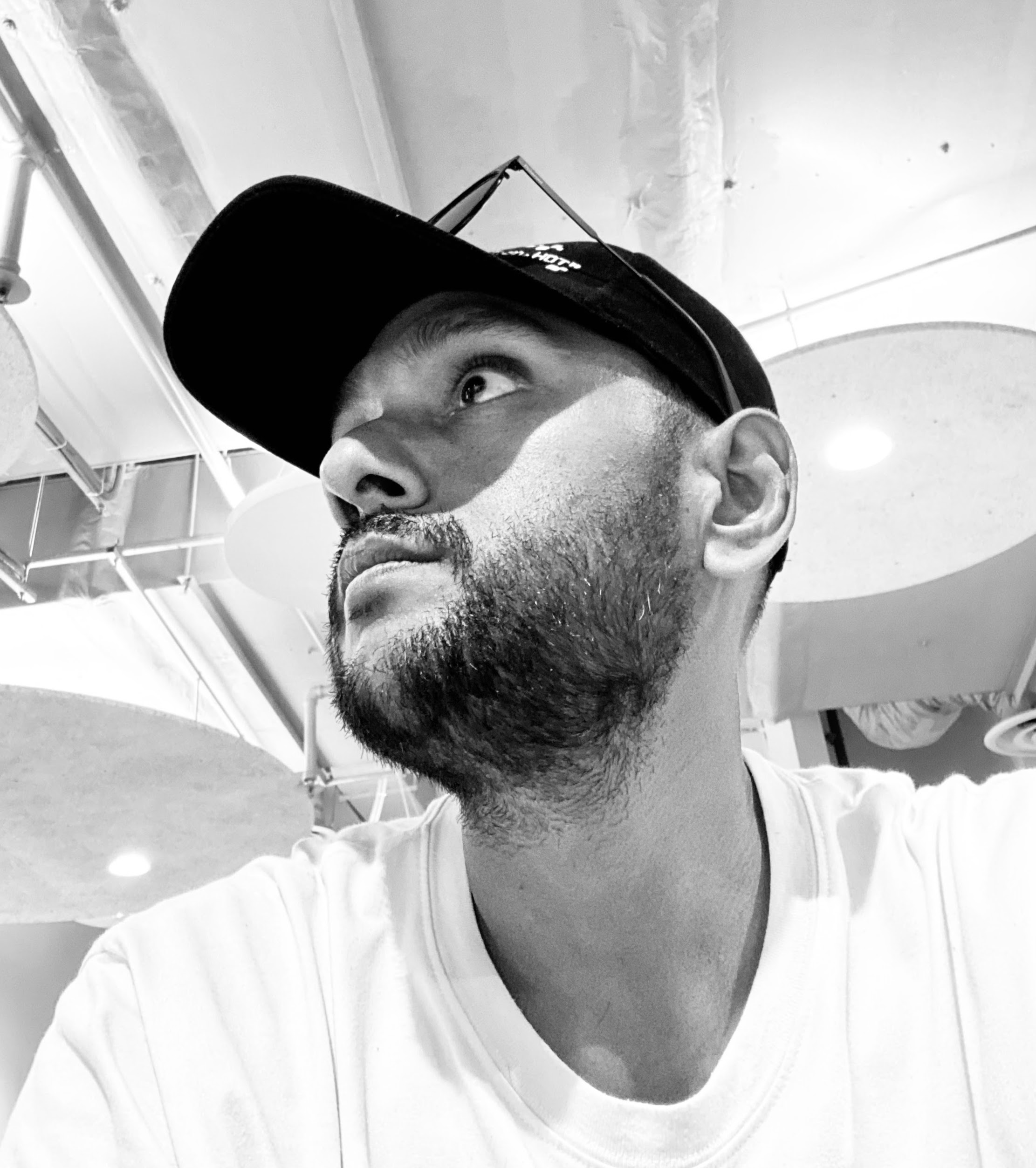
Aditya Jalisatgi
Founder, Nubio
P.S. — If you've read this far, you're either a potential partner or you're a procrastinating founder. If the former, reach out. If the latter, I respect the commitment to avoidance. Channel it into something generative. Like reaching out anyway.
Aditya Jalisatgi
From AlphaGo to AlphaFold to the physical economy—the founding thesis behind Nubio.
Subscribe for cutting-edge AI updates
Discover how AI is transforming industries. Get exclusive insights, case studies, and thought leadership from our team.